

A client once showed me his books: £240,000 in signed contracts, a healthy-looking profit margin, and £31 in the bank. He'd paid his staff that morning by transferring money from his personal savings. Again. That gap between "profitable on paper" and "can't make payroll on Friday" is what cash flow management for a small business actually means, and it's the thing that kills more companies than bad ideas ever do.
The commonly cited figure is that 82% of small businesses fail because of poor cash flow management. I've never been able to verify where that number originates, and honestly, I've stopped caring about the exact percentage. What I do know from watching small firms fold—three of them in my own network over the past few years—is that almost none of them died from lack of demand. They died from timing.
Key takeaways
- Profit and cash are not the same thing, and a growing business can starve while its P&L looks great.
- The single most useful metric to track weekly is days cash on hand—how long you could keep operating with zero new income.
- Invoicing speed beats chasing speed. Every day you delay an invoice is a day added to your collection cycle.
- A rolling 13-week forecast catches most cash crunches before they become emergencies.
- Payment terms are negotiable far more often than owners assume, on both sides of the ledger.
- Automation pays for itself in collectible days, not in software features.
Why cash flow management breaks small businesses (and why profit doesn't save you)
Here's the counterintuitive bit that took me embarrassingly long to internalise: growing companies are more likely to run out of cash than stagnant ones. A stagnant business collects roughly what it spends. A growing one pays for inventory, labour, and overhead now, and collects for that work later. The faster you grow, the bigger the gap between what's gone out and what's come back in.
If your customer pays in 45 days and your supplier wants payment in 15, you are financing a 30-day hole out of your own pocket on every single order. Multiply that by growth, and the hole widens.
The metrics that actually matter
Most owners track revenue and ignore the plumbing. Track these four instead:
- Days cash on hand — cash balance divided by average daily operating expenses. Under 30 days is a warning sign; under 15 is a fire.
- DSO (days sales outstanding) — how long, on average, it takes to get paid. If your terms say 30 and your DSO says 52, your terms are fiction.
- Cash conversion cycle — DSO plus inventory days minus days payable outstanding. This tells you how long your money is trapped inside the business.
- Payment concentration — the percentage of your receivables sitting with your three biggest clients. Above 50% is a structural risk.
That last one bit me hard. One client made up roughly 60% of my receivables, and when they hit their own cash crunch, they stretched payment to 90 days without warning. My DSO jumped from 34 to 58 in a single quarter. Nothing else in the business changed. I just stopped getting paid.
A practical method to improve cash flow: the 6-3-1 rule
You may have seen references to a "6-3-1 rule" for building business cash flow. It circulates online without a clear author or origin, and I'll be upfront: I couldn't track down a definitive source for it either. But as a working framework it holds up, and I've adapted it to my own operation. Here's how I apply it.

| Horizon | What it covers | What you do with it |
|---|---|---|
| 6 months | Strategic cash outlook | Model hiring, equipment purchases, seasonal dips, and tax payments. Decide now whether you need a credit line before you actually need it. |
| 3 months | Operational forecasting | Match expected inflows against committed outflows week by week. Spot the gap and act while you still have options. |
| 1 month | Immediate execution | Daily or weekly cash position. Chase overdue invoices, delay discretionary spend, confirm payroll. |
The logic is simple: decisions made at six months out are cheap and flexible, and the same decisions made at one month out are expensive and desperate. A £30,000 shortfall forecast in February is a conversation with your bank. The same shortfall discovered in April is a phone call to a factoring company at rates that will make you wince.
How to run the one-month layer without losing your mind
Use a rolling 13-week spreadsheet. Thirteen weeks is roughly a quarter, which is long enough to see trouble coming and short enough that your numbers stay honest. Rows are weeks; columns split into opening balance, expected receipts (broken down by client), committed payments, and closing balance.
Update it every Friday. It takes about twenty minutes once the structure exists, and it will save you from the most common small business cash flow mistake: discovering a shortfall three days before payroll.
How to speed up the money coming in
Working capital is usually locked up on the receivables side, not the payables side. Two levers do most of the work.
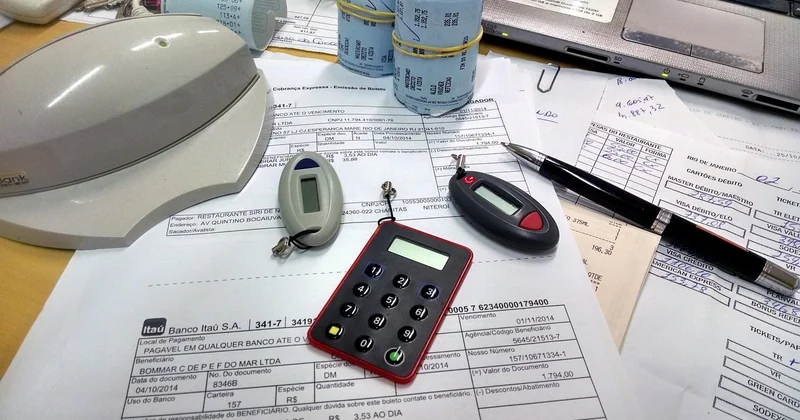
Invoice immediately and consistently
I once audited a small agency that was sending invoices on the last Friday of the month regardless of when work was delivered. Average delay between delivery and invoice: 19 days. Fixing that alone—invoicing the day the work shipped—cut their DSO by roughly two weeks without a single conversation with a client.
- Invoice the day you deliver, not when the accounting period rolls over.
- Make payment easy: a clickable payment link on the invoice beats bank details in a footer.
- Send automated reminders at day 7, day 21, and day 30 past due. Pre-written, polite, consistent.
- Charge late fees—and actually mention them in the contract, so they're real.
Deposits and milestone billing are the other lever. If you're delivering a project worth £20,000 over three months, taking 40% upfront isn't aggressive. It's standard. I resisted this for years because I thought it made me look small. It made me look organised. Nobody respectable objected.
Discounts for early payment: worth the margin hit?
An early-payment discount (say, 2% off for payment within 10 days on 30-day terms) costs you 2% of the invoice but pulls cash forward by three weeks. Whether that's worth it depends entirely on what that cash is doing for you. If it's preventing an overdraft at 8% annual interest, yes. If it's just sitting in the current account, no.
Run the arithmetic before you offer it. A 2% discount on a 30-day-to-10-day acceleration is an annualised cost of roughly 36%. That's expensive money. Use it selectively, with clients who are slow payers anyway.
How to slow down the money going out (without wrecking relationships)
Here's where owners leave money on the table. Supplier terms are the cheapest form of financing available to a small business, and most don't ask.

Negotiate terms, not just price
When I renegotiated my main supplier contract, I got exactly zero movement on unit price and an extra 20 days on payment terms. That was worth more to me than the 3% discount I'd been angling for. Twenty extra days on £15,000 of monthly purchases means £10,000 of cash that stays in my account for three more weeks.
Ask early, ask once, and ask before you need it. Suppliers respond better to "I'm planning next year's volumes" than to "I'm short this month."
The subscription audit
Every small business I've looked at in the past two years had between four and eleven recurring software subscriptions it could not fully justify. A tool that costs £89 a month feels trivial. Nine of them do not. Run the audit twice a year: what did we log into this quarter, and does anyone remember why?
Build a cash buffer and a backup plan
Cash reserves are boring and they are the whole game. Target three months of operating expenses in a genuinely accessible account. Most small businesses never get there, and I'll admit I took four years to hit it—but the first time you have it, you stop making decisions out of fear. That alone changes how you negotiate.
Alongside the buffer, set up a credit facility before you need it. Banks lend to businesses that don't need money. A pre-approved line of credit you never draw costs little and buys you a genuine option. An invoice financing arrangement works similarly for B2B firms with reliable receivables, though the effective cost is higher than most brochures suggest—read the fee structure carefully.
What if your revenue is seasonal?
Seasonal businesses need a different rhythm. In your peak months, lock cash into a reserve account and treat it as untouchable. Model the trough explicitly: how many weeks of low or zero revenue, and what fixed costs run through it? Then match the drawdown to the trough rather than guessing.
Common cash flow problems and how to spot them early
- Profitable but broke — the P&L looks fine, the bank account doesn't. Usually a DSO problem.
- Customer concentration — a single client's payment behaviour becomes your payment behaviour.
- Overtrading — taking on more work than your working capital can fund. Growing too fast is a real failure mode, not a humblebrag.
- Tax and VAT blindness — treating collected tax as revenue until the bill arrives.
- No forecast at all — managing cash by looking at the bank balance and hoping.
If any of those sound familiar, you don't need a new strategy. You need a forecast, a buffer, and a phone call to your slowest-paying client.
What I got wrong
For two years I ran my business off the bank balance and a vague sense of optimism. I told myself forecasting was for bigger companies with finance departments. What actually happened was that I discovered problems about a week after I could have solved them cheaply.
The turning point was embarrassingly small: I started writing down, every Friday, what I expected to come in and go out over the next thirteen weeks. No software. A spreadsheet. Within six weeks I'd found two clients who were quietly 40 days late on invoices I hadn't noticed were overdue, and a software subscription renewing annually that I'd stopped using the previous spring.
None of this is sophisticated. It's just the difference between steering and drifting—and drifting feels fine right up until the moment it doesn't.


